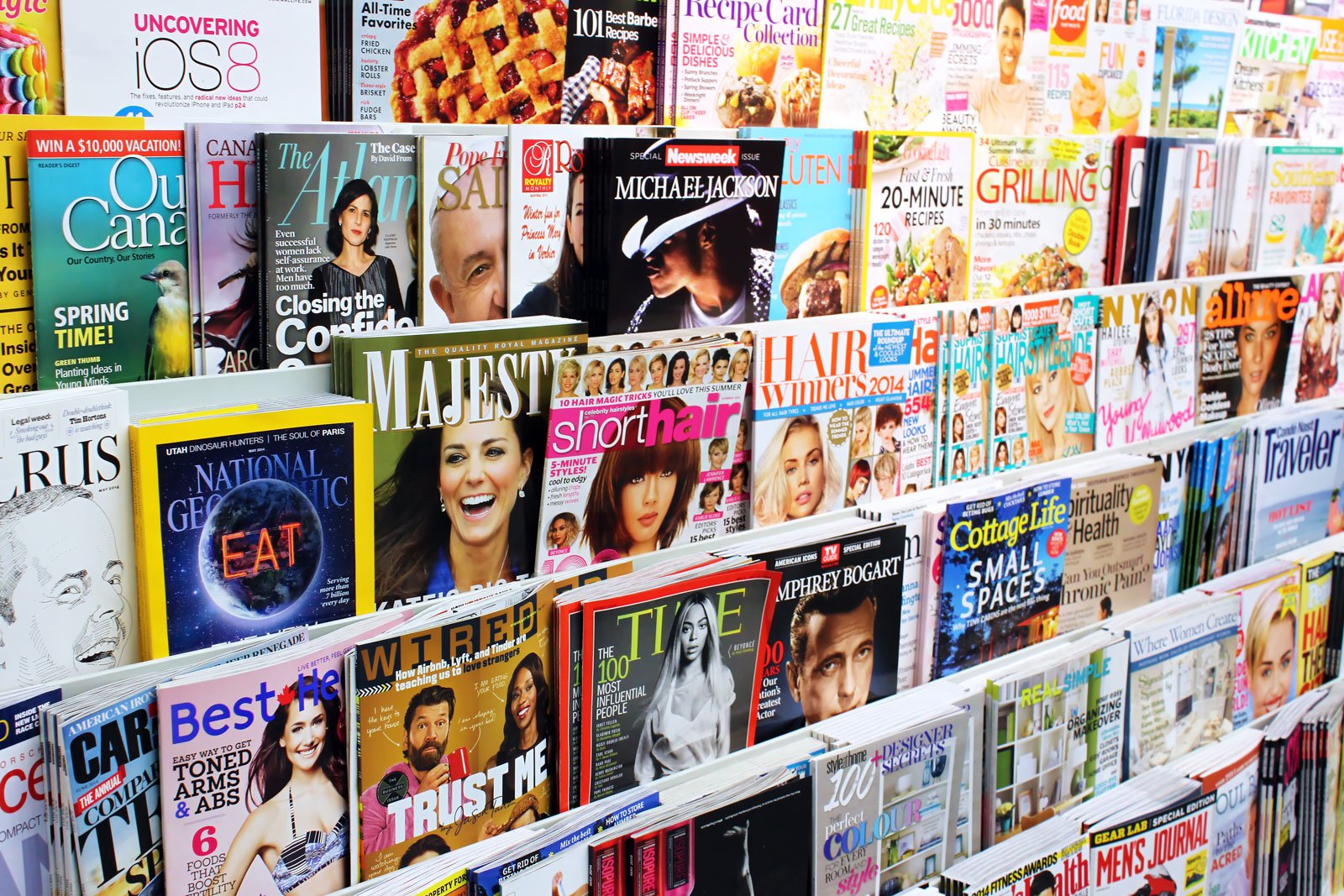
Magazines have become a familiar part of everyday life, covering everything from fashion and entertainment to science, politics, business, and culture. But before glossy publications filled newsstands and digital magazines reached millions of readers, publishers had to create a new kind of reading experience. The history of the first magazine is therefore closely connected to the development of modern journalism and mass communication.
Early magazines were different from newspapers and books. They brought together essays, stories, commentary, reviews, and information on several subjects in a single publication. This format gave readers an opportunity to engage with a variety of ideas rather than focusing on one type of news or one particular subject.
Understanding how magazines began helps explain why they remain such an important part of publishing today. Although the technology has changed dramatically, the basic goal remains familiar: bringing carefully selected information and ideas together for a particular audience.
What Was the First Magazine?
Determining the earliest true magazine can be complicated as early publications were not necessarily according to the modern definition of a magazine. During the 17th century, several publications were competing to find the format, and historians can adopt various standards when referring to the first one.
It is often said that with the onset of magazine printing came the magazine called Erbauliche Monaths Unterredungen, a magazine in German, published by Johann Rist starting in 1663. The paper contained talks on various topics and is commonly referred to as an early magazine-like paper.
The second noteworthy title was The Gentleman Magazine which was initiated in 1731 in London by Edward Cave. It is especially noteworthy since it has served to make the magazine a familiar publishing format. Instead of having a continuous focus on news, it unified political commentary, literature, essays, poetry, among other content.
Even the term magazine originates with a term that describes a warehouse or collection. This concept was appropriate in the new publication format since magazines gathered various types of the written material altogether.
As magazines experimented with the format, they slowly became distinct to the newspapers, books and pamphlets.
How Early Magazines Changed Reading Habits
Early magazines were published at a time when literacy was increasing and writing technology was increasing the access to written material. Publications which provided information and entertainment in a convenient format were of increased interest to readers.
In comparison, newspapers were usually more well-rounded on up-to-date occurrences, whereas books were more likely to have more lasting works or subjects. Magazines had an intermediate usefulness. They might include shorter articles that are dedicated to multiple topics and may be released on a regular basis.
This prompted the readers to have a habit of consuming the same publication. Rather than purchasing one book and reading it to its final page, the readers were able to pick up a magazine and get the best articles that were of interest to them.
Diversity in content was a major center of strength of the format. There may be one problem that consists of political observations, literary contribution, science, cultural commentary, and practical recommendations.
This model later impacted on a lot of various kinds of publications. As it developed, magazines would end up being specialized, with publishers establishing content based on areas of interest and targeting intended audience.
The Growth of Magazine Publishing
In the 18th and 19th centuries, magazine publishing increased greatly. The invention of printing, paper production, transport and distribution systems among others, made circulation easier, since it was easier to produce and distribute periodicals.
Magazines became more available, with the lower costs of publication. Publishers started producing books that dealt with specific groups, interests, occupations, and lifestyles.
Writers were afforded a platform in literary magazines to publish essays, poetry and fiction. Research and new ideas were shared with the aid of scientific publications. Criticism of the significant issues was provided by political and cultural magazines. Subsequently, fashion, food, travel, home life, and entertainment, among other things of everyday living, were covered by consumer magazines.
Advertising too took on a more significant role. Due to increase in circulation, the magazines were appealing to businesses in advertising products and services. The revenues gained through advertising supported new publications through publishers, making the publications affordable to readers.
Another significant development was illustrations. Advancement in printing technologies enabled magazines to incorporate more and more detailed art and ultimately photographs. Graphical material changed the outlook of the magazines and made them more attractive to the wider audiences.
The magazines have become a significant aspect of popular culture by the 20th century.
Why Magazines Became So Influential
Magazines were more than information sources. They were used to influence popular discourse, cultural tendencies, and shape the way people perceived fashion, entertainment, politics, and social problems.
Specialized publications offered the readers a feeling of being part of communities consisting of people with common interests. The sports magazine could relate the fans with players and games whereas the fashion magazine could affect the fashion and beauty ideals.
Writers, photographers, illustrators and editors also had opportunities of great significance through magazines. There are numerous successful creative professionals who made their career in the field of magazine publishing.
Magazines of investigations and opinions became involved in the discussion of political and social life. Publications in literature exposed the readers to new writers and writing styles.
The magazine format was especially efficient due to the integration of editorial and visual presentation. Editors were free to choose the topics that were worthy of coverage, whereas designers were in a position to style each issue with a unique appearance.
This mixture contributed to the emergence of identifiable identities and following of individual publications.
From Print Pages to Digital Magazines
The advent of computers, smartphones, websites, and social media has transformed the magazine industry in many ways. Readers will no longer need to wait until a printed issue comes to a store or by mail.
Digital magazines are able to print articles instantaneously and update information more often. Interactive, video, animation, hyper-link, and social sharing has increased the offerings of a magazine-type publication.
Nevertheless, most of the basic tenets are retained. Magazines have survived successfully, to date, as they rely on solid writing, sound topics, editorial discretion, pleasant presentation, and understanding their audience.
There are still readers who still use the printed magazines due to its physical design and slow reading pace. Others will choose digital versions since it conveniently and easily can be accessed anywhere.
The contemporary publishing industry has thus produced this amalgamation between the conventional and electronic formats instead of entirely forsaking the idea of magazines.
Visit this site and more information: Vogue Magazine
Final Thought
The story of the first magazine is really the story of how publishers learned to bring different ideas together for curious readers. Early periodicals created a new space between newspapers and books, offering a mixture of information, commentary, literature, and entertainment.
Over the centuries, magazines evolved alongside society and technology. They moved from small printed publications to widely distributed consumer titles and eventually to digital platforms accessible around the world.
While the appearance and delivery methods have changed, the central purpose remains remarkably familiar. Magazines organize ideas for an audience, give writers and creators a platform, and provide readers with a carefully selected collection of information.
That enduring combination of variety, creativity, and editorial focus is what has allowed magazines to remain relevant for centuries.
FAQs
What is considered the first magazine?
There is no universal answer because the definition of a magazine varies. Erbauliche Monaths Unterredungen, published in Germany in 1663, is often identified as one of the earliest magazine-like publications.
When did The Gentleman’s Magazine begin?
The Gentleman’s Magazine was launched in London in 1731 by Edward Cave. It became an important influence on the development of the modern magazine format.
How were early magazines different from newspapers?
Early magazines generally offered a broader mixture of essays, literature, commentary, and information, while newspapers focused more heavily on current events and news.
Why did magazines become popular?
Magazines offered readers a convenient combination of information and entertainment. Their variety allowed publishers to appeal to specific interests and audiences.
How did advertising affect magazine publishing?
Advertising provided an important source of revenue for publishers. It helped support production and distribution while allowing magazines to reach larger audiences.
Are magazines still relevant today?
Yes. Magazines continue to exist in both print and digital forms. Many now combine traditional articles with videos, interactive content, social media, and other digital features.
Leave a Reply