

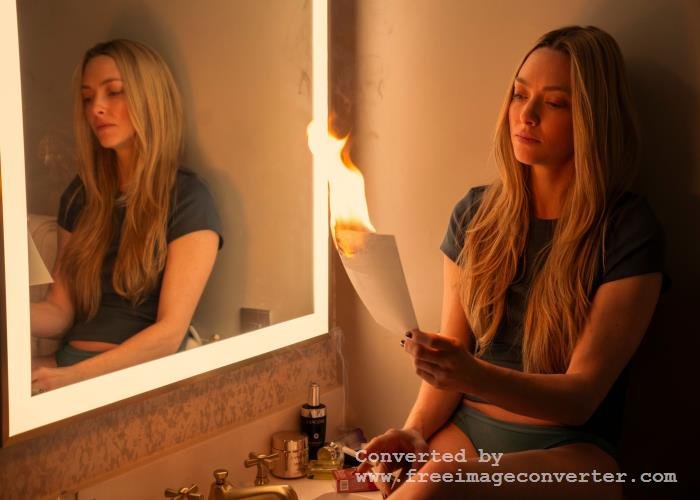

The Housemaid is a psychological thriller built around secrets, manipulation, attraction, and shifting power. Among its most discussed moments is the sydney sweeney housemaid hotel scene, where Sydney Sweeney’s character, Millie Calloway, and Andrew Winchester, played by Brandon Sklenar, cross an important line in their complicated relationship. The scene stands out not simply because it is intimate, but because of what it means for the story.
Directed by Paul Feig and adapted from Freida McFadden’s bestselling novel, The Housemaid places Millie in the home of wealthy couple Nina and Andrew Winchester. What initially looks like a straightforward live-in housekeeping job gradually becomes a dangerous psychological game.
The hotel sequence arrives at a crucial point in that story. By then, Millie has already experienced Nina’s unpredictable behavior and has begun to believe Andrew may be the safer person in the household. That perception makes the encounter more complicated than a simple romantic moment.
What Happens Before the Hotel Scene?
In order to see the importance of the hotel sequence, it is best to first consider the events which led up to it. It’s something Millie does because she considerably needs a new beginning. Because of her rough childhood, it’s hard for her to find stable employment, and it just seems like living with the wealthy Winchester family is too good to be true.
But the family is soon at ease. Nina Winchester (Amanda Seyfried) also mistreats Millie, leaving her bewildered and suspicious. Meanwhile, Andrew shows a much greater understanding. He is well-controlled, attuned and appears to be ready to protect Millie from Nina’s mistreatment.
The contrast between the two is very much at the heart of the film. The audience is urged to view the Winchester marriage as though from Millie’s point of view, so that Andrew may start off as a reasonable character stuck in an unhappy marriage.
As the characters come closer with the situation of the Broadway tickets. Nina makes Millie very nervous about the tickets and Andrew offers to go with her. Their evening together is a chance for the attraction that has been growing under the surface becomes all but irresistible.
The two later reappear at a hotel where their love affair becomes forever changed according to the film’s story.
What is important is that the hotel is not just any hotel. It provides temporary relief from the Winchester home for Millie and Andrew. In her head, out of the way from Nina and an increasingly strange home, Millie can for a fleeting moment imagine that she has discovered someone who understands her.
Why the Hotel Scene Is Important to the Story
The hotel sequence works as a turning point because it changes the relationship between Millie and Andrew.
Up to this point, their relationship is largely based on talking, attraction and the feeling that Andrew is shielding Millie from Nina. Their relationship is then far more complicated. Millie isn’t just the hapless employee caught between two unhappy couples.
Her choice has repercussions, especially since Andrew is still married to Nina.
This is where The Housemaid’s magic of attraction comes into play. The audience isn’t watching two characters fall in love, it’s watching two characters fall in love with each other. They are observing a relationship that is forming in an environment which may not be conducive to appearances.
This is a scene that, even when the characters think they are getting closer, still has an air of danger.
It also adds to the shift in power in the movie. Millie starts the story with virtually no choices about her situation. She has no choice but to accept the job, place to live, and the attitude of Nina.
This hotel encounter seems to grant her more agency. She doesn’t just respond, she chooses to respond. However, she soon finds herself in an even more complex situation.
This contradiction is one of the things that make this scene memorable in the context of the story.
Sydney Sweeney’s Performance as Millie

One of the reasons why Sydney Sweeney performance is significant is because Millie isn’t a character that will divulge everything on the spot. Her expressions, reactions and level of confidence fluctuate, giving audiences a sense of understanding the thoughts she may be experiencing even if she doesn’t talk them out loud.
The emotional change is as important as the romantic aspect in the hotel scene. Throughout the film, Millie has been struggling to find out whether the people around her are trustworthy or not. Her friendship with Andrew is a way to evade that uncertainty.
Sweeney does not create and play that uncertainty without making Millie a totally passive character. The character is weak, but she is also taking decisions.
This balance is even more crucial as the film heads toward its big epiphany. As the audience learns about the Winchester family, their understanding of Millie morphs as well.
Critics have commented on the film’s blend of suspense, melodrama and erotic-noir elements. According to The Guardian, it is a “stylised suspense thriller, with psychological manipulation and a potent chemistry between Millie and Andrew.
Sweeney carries her weight. The film does not have the Hollywood habit of using the hotel encounter as an independent romantic subplot, but instead it serves to further advance Millie’s character in a more central way into the main story.
How Paul Feig Approached the Intimate Sequence
Creating intimate scenes is not easy since the director must balance performance, story, choreography and comfort of the actors.
Paul Feig has talked about his approach to the close-ups in The Housemaid. According to reports, the scenes were dealt with delicately with the presence of an intimacy coordinator for the making of the scenes. “It’s like choreography,” Feig said, “you need to be prepared, and you need to be communicating with set designers and the actors.”
It’s interesting to note that the whole scene takes place behind the scenes, since the final shot is actually a scene from a larger thriller rather than one that is going on in its own right. The filmmakers needed the time to set the tone of the film and to propel the characters forward in their relationship.
The hotel environment also fosters a sense of privacy. Nearly every encounter has another level of tension as Millie and Andrew are taken out of the Winchester home.
The contrast gives the scene a different feel to it than the previous one.
Meanwhile, the audience is aware of the fact that the relationship is not going on smoothly. Andrew is married, while Millie works for his family, and Nina is still a strong figure in both their lives.
Those details keep the sequence from being a straightforward love story vacation.
Why the Scene Became Such a Talking Point
The hotel moment attracted considerable online attention after the movie’s release. Sydney Sweeney’s popularity, the film’s bestselling-book origins, and the thriller’s provocative marketing all contributed to interest surrounding the sequence.
Searches and social-media discussions often isolate the hotel scene from the rest of the movie. That can make it seem as though the moment exists mainly for shock or visual appeal. In context, however, it serves a more important purpose.
The scene represents the point at which Millie’s relationship with Andrew becomes an undeniable part of the story.
It also creates dramatic irony. Viewers are encouraged to question Andrew’s behavior even while Millie becomes more comfortable around him. The apparent romantic escape therefore carries an uncomfortable undertone.
The film’s larger story eventually makes that discomfort meaningful.
As the plot develops, the audience learns that the Winchester household is far more complicated than it first appeared. The apparent roles of victim, aggressor, protector, and outsider begin to shift.
That is one of the strengths of the scene: its meaning changes as the audience learns more.
A first viewing may make the hotel sequence feel like a dramatic romantic development. After understanding the full story, it becomes another piece of the larger psychological puzzle.
The Hotel Scene and the Film’s Bigger Themes
At its heart, The Housemaid is about appearances.
Millie enters a wealthy home and assumes she understands the basic relationship between its residents. Nina seems unstable. Andrew appears kind. Millie seems like the outsider who has stumbled into a troubled marriage.
But the film repeatedly challenges those assumptions.
The hotel scene participates in that process by making Millie’s relationship with Andrew seem increasingly important. It also gives the audience another reason to believe that Andrew may be on Millie’s side.
Without getting too far into the film’s later twists, the relationship becomes essential to understanding the manipulation happening inside the Winchester family.
The scene also reinforces the theme of control. Millie begins the film with limited power, while Andrew appears to have social and financial advantages. Their relationship therefore cannot be separated from the imbalance surrounding them.
This is why the sequence has more narrative weight than a typical romantic scene.
It changes what Millie thinks she wants, changes how she relates to Andrew, and ultimately affects how she understands the people around her.
The film’s suspense works because viewers are constantly encouraged to reconsider what they believe. The hotel encounter fits neatly into that structure.

Final Thought
The Sydney Sweeney housemaid hotel scene remains one of the most discussed moments in The Housemaid because it combines character development with suspense and emotional uncertainty. Millie’s encounter with Andrew is a major turning point, moving their relationship from subtle attraction into something with serious consequences.
Sydney Sweeney’s performance gives the moment emotional significance, while Paul Feig’s direction places it within the film’s broader atmosphere of secrecy and manipulation. The scene may attract attention on its own, but its real importance becomes clearer when viewed as part of Millie’s larger journey.
Ultimately, the hotel sequence is less about the setting itself and more about what happens to Millie’s understanding of trust, attraction, and danger. Once she leaves that room, her relationship with the Winchester family can never return to what it was before.
Visit this site and more information: Vogue Magazine
FAQs
Who does Sydney Sweeney play in The Housemaid?
Sydney Sweeney plays Millie Calloway, a woman who accepts a live-in housemaid position with the wealthy Winchester family. Her complicated past and uncertain circumstances make her an important part of the film’s psychological mystery.
Who is Andrew in The Housemaid?
Andrew Winchester is Nina Winchester’s husband and Millie’s employer. He is played by Brandon Sklenar and initially appears to Millie as a sympathetic figure within the troubled Winchester household.
What happens in the hotel scene in The Housemaid?
Millie and Andrew go to a hotel after spending an evening together. Their relationship becomes intimate, marking a major turning point in the story and changing the nature of their connection.
Why is the hotel scene important?
The sequence is important because it moves Millie’s relationship with Andrew from attraction to a much more consequential relationship. It also increases the tension surrounding Nina, Andrew, and Millie’s position within the household.
Is The Housemaid based on a book?
Yes. The film is adapted from Freida McFadden’s bestselling psychological thriller The Housemaid. The movie retains the book’s central setup while adapting its characters and events for the screen.
Who directed The Housemaid?
Paul Feig directed The Housemaid. The film combines psychological-thriller elements with dark humor, melodrama, and suspense.
